Campspot: RV & Tent Camping
- 4.7
- Rating
- 500.00K
- Installs
- Free
- Price

 Analysis by App-foxy
Planning a camping trip usually starts with a simple question: where can I actually stay? The difficult part comes afterward, when I have to compare campgrounds, check dates, work out whether the site suits an RV or a tent, and keep track of several booking pages at once. Campspot: RV & Tent Camping is built around reducing that search-and-booking friction. It is a Travel & Local app from Campspot, and its main value is putting campground stays into one place rather than making me begin every trip with a scattered web search.
I found the app most useful when I already knew the general area and wanted to turn that idea into a practical reservation. It is free, rated for Everyone, and available for devices running Android 8.0 or later. The current version is 1.52.0. With a 4.7 average from around 6,200 ratings and over 500,000 installs, it has clearly attracted more than a small group of occasional campers. Still, those figures do not tell me whether it will fit every kind of trip, so the important question is how its central booking capability changes the planning process.
One search space for campground stays
The strongest idea here is not complicated: Campspot gives me a focused way to look for campground accommodation and reserve it. That matters because campground availability is often more fragmented than hotel availability. A hotel search can feel fairly standardized, while camping involves different site types, arrival dates, equipment, facilities, and rules. Moving between individual campground websites can make a short trip feel like an administrative project.
You May Also Like

 Blood Strike: 2.5 Anniversary
Blood Strike’s Loadouts Turn Every Drop Into a Tactical Gamble
A close look at Blood Strike’s custom loadouts: how fast access to signature weapons reshapes its battle royale rhythm, rewards preparation, and narrows the gap between fights.

 Pandora - Music & Podcasts
Pandora’s Music Is Easy to Start, but Harder to Recover
Pandora’s strength is its low-effort path from a seed to a station. Its weak spot is how much confidence it asks you to place in connection, setup, and quiet recovery.

 8 Ball Pool
 Is Built on Rivalries, Rematches, and Routine
A close look at the rivalries, rematches, shared routines, and unanswered safety questions that turn a quick pool match into a persistent mobile community.

 Samsung Music
’s Quiet Strength Is Playing What You Already Own
Its reach comes less from spectacle than from dependable access to a personal library. That simplicity is both the app’s strongest retention engine and its ceiling.

 AccuWeather: Weather Radar
AccuWeather Review: A Quick, Clear Forecast for Everyday Decisions
For everyday plans, the best forecast is the one you can understand quickly. AccuWeather makes rain timing, radar, and local conditions easy to act on, with a few trade-offs.

 Hill Climb Racing
Why Hill Climb Racing Still Turns Crashes Into One More Run
A tiny car, a bumpy hill and one more upgrade: Hill Climb Racing keeps resurfacing because its simple chaos makes every near-miss feel personal.
More From Our News Desk



In practice, I use the app as a first filter. I enter the destination and travel dates, then examine the available campground choices instead of searching the entire internet for places that may or may not accept online reservations. That distinction is important. The app is not merely a general travel directory in my eyes; it is most useful when I want to move from “I would like to camp somewhere around there” to “these are the stays I can investigate now.”
The focused approach is especially helpful for people who alternate between RV and tent trips. I do not have to begin with the assumption that every campground suits every setup. A tent camper and an RV traveler may be looking at the same region but need very different kinds of stays. Keeping the search centered on campgrounds makes that difference part of the decision rather than an afterthought.
The real benefit is less tab switching, not magical trip planning. I still need to judge whether a place is right for me, but the app gives that judgment a more organized starting point. Instead of collecting vague possibilities from maps, social posts, and separate reservation pages, I can work through campground options with a clearer booking purpose.
Turning a vague destination into a usable shortlist
One of my favorite ways to use the app is before I have committed to a specific campground. I may know the town, park, lake, or general region I want to visit, but not the exact place to stay. A broad search lets me see what is available around that idea. From there, I can compare the practical shape of each option: whether it appears relevant to my equipment, whether the dates work, and whether the location makes sense for the activities I have planned.
This is a better workflow than choosing a campground first and discovering later that the desired dates are unavailable. It also helps when I am planning with another person. Rather than sending a long list of unrelated links, I can narrow the choices around one destination and discuss the actual stays that fit the trip.
There is a useful distinction between discovery and confirmation. Campspot helps with both parts of the process, but I should not treat the first promising result as an automatic decision. I still read the campground information carefully, check the selected dates, and make sure the site type matches my vehicle or tent. The app reduces the search burden; it does not remove the responsibility of checking the reservation details.
What the booking workflow feels like
The workflow makes the most sense when I approach it in stages. First, I search by place and dates. Next, I look at the matching campground options. Then I inspect the stay closely enough to understand what I am selecting before proceeding with the reservation. That order sounds obvious, but it prevents a common camping mistake: becoming attached to a location before confirming that the available site works for the actual trip.
For an RV trip, I would pay particular attention to the site description and any requirements connected with the vehicle. For a tent trip, I would focus on the kind of camping area offered and whether it suits the way I expect to travel. I also use the date search as a planning tool rather than only a final checkout step. If the original weekend is not workable, shifting the dates early can be faster than repeatedly reopening separate campground pages.
Another practical habit is to keep the trip’s priorities visible while browsing. If I need a convenient base for a short stop, I do not compare options in the same way as I would for a longer outdoor break. Location, site type, and booking availability may matter more than a long list of extras. Campspot works best when I use it to answer a defined question, such as “what can I reserve near this destination on these dates?”
The app’s free price makes it easy to keep installed even if I only camp occasionally. I can use it when a trip appears without committing to a separate planning tool. That is convenient for spontaneous travelers, although the reservation itself is still the important financial step, so I would always review the final booking information before confirming anything.
How it helps on a real camping weekend
Imagine I decide on a two-night weekend near a popular outdoor destination. I know the area I want, but I have not chosen between bringing a tent and taking an RV. My old approach would be to search maps, open campground websites, compare calendars, and make notes about which places might accept my setup. With Campspot, I begin with the destination and dates, then use the resulting choices to decide what kind of trip is realistic.
If the available options favor one setup, that can change my plan early. Perhaps a tent stay is easier to find for the weekend, or perhaps the available RV choices make the vehicle trip more practical. The app does not make that decision for me, but it exposes the constraint before I have spent time planning around an unavailable campground.
Once I have a shortlist, I compare it against the purpose of the weekend. A campground close to the activity may be better than one that looks appealing but creates a long drive each day. For a short trip, every unnecessary transfer takes time away from being outdoors. This is where the app’s narrow focus becomes valuable: I can keep the reservation question in front of me instead of drifting into endless destination browsing.
For a family, the same workflow can prevent a last-minute scramble. One person can search while another checks the equipment and travel plan. The group can agree on a campground before the booking is made, rather than discovering after arrival that the selected site was intended for a different kind of camping. I would still verify all important details at checkout, but the shared decision starts from a more manageable set of options.
A useful tactic for uncertain dates
Campers often have a destination in mind before they have perfect date flexibility. In that situation, I would search the preferred dates first, then widen the planning conversation if the results do not suit the trip. This is more efficient than assuming the destination is impossible after one unsuccessful attempt. A nearby date can sometimes be the difference between a workable reservation and a complete change of plan.
The key is to treat the calendar as part of the search rather than a box to fill in mechanically. If I am planning around a short break, I compare the available dates with travel time and the number of nights I actually need. If I am traveling with an RV, I also consider whether a date change affects the rest of the route. Campspot is most helpful here as a decision surface: it shows me how the desired place and desired timing interact.
This approach also reduces a subtle kind of wasted effort. I do not want to research campground details deeply before knowing whether the stay is available. I first establish that the basic combination of destination, dates, and camping style is possible, then spend more attention on the finalists.
Where it is stronger than the usual alternatives
Compared with a general map app, Campspot is more directly connected to the act of booking a campground stay. A map may show many places, but it can leave me to determine whether each one accepts reservations, what dates are open, and which accommodation type applies. Campspot gives the search a more specific purpose.
Compared with searching the open web, it offers a cleaner starting point. Web searches are useful for inspiration and local information, but they can mix official pages, outdated references, reviews, and unrelated accommodation. When I am ready to reserve a campground, a dedicated app feels more efficient than sorting through broad results.
Compared with contacting campgrounds individually, the app can save time when I am comparing several possibilities. Direct contact may still be preferable for unusual needs or questions that require a person’s answer, but it is a slow first step for a straightforward trip. I would use Campspot for the initial search and reservation path, then contact a campground directly when my situation falls outside the normal booking flow.
The tradeoffs I noticed while using it
The app’s focus is also its main limitation. It is designed around finding and booking campground stays, not around being a complete outdoor-trip planner. I would not rely on it alone for route planning, weather decisions, trail research, packing, navigation, or judging conditions at the destination. Those tasks need other tools and, in some cases, local knowledge.
That means Campspot is not the best choice for someone who wants a broad social camping community or a deeply editorial guide to every outdoor area. If my main goal is reading personal trip reports, planning a hiking route, or finding remote places that do not participate in a centralized booking process, another resource may be more appropriate. The app is strongest when a reservable campground is the center of the task.
There can also be a difference between a convenient search result and a perfect personal match. A campground may appear suitable at a high level but still require careful reading before I commit. I need to check the site type, dates, equipment fit, and the practical details that matter to my group. This is not a criticism unique to camping apps; it is simply more important here because a wrong choice is harder to fix after arrival than a disappointing hotel room.
I would never treat a successful booking screen as proof that the whole trip is ready. My own checklist still includes the route, arrival timing, vehicle suitability, weather, food, and essential equipment. Campspot handles the stay search well, but it should sit inside a wider planning routine.
When a different method is better
If I am looking for a very specific campground that I already know, going directly to that campground may be faster. The same is true when I have a detailed question about accessibility, a special vehicle, a group arrangement, or an unusual arrival situation. A direct conversation can be more useful than browsing standard booking options.
If I am traveling without fixed dates and simply want to explore possibilities, a map or outdoor discovery service may provide more inspiration. Campspot becomes more valuable as my idea becomes concrete. Once I know the region and have a reasonable date range, its booking-oriented design starts saving time.
There is also a tradeoff between convenience and research depth. A centralized booking experience helps me compare available stays, but I should not confuse that convenience with a complete understanding of the surrounding area. I still investigate the destination through appropriate local or outdoor sources when the trip depends on road conditions, activities, or seasonal considerations.
Who will get the most from Campspot
I think the app is a particularly good fit for casual campers who do not want to memorize campground websites. It is also useful for people who switch between tent camping and RV travel, because the central search gives both kinds of trips a common starting point. Families and groups can benefit from the shortlist approach, especially when they need to settle on a realistic destination before discussing the smaller details.
It suits travelers who value a reservation more than open-ended exploration. If I am planning a weekend around a known destination, I want to see what can actually be booked rather than collect attractive but uncertain ideas. The app helps me make that transition with less friction.
More experienced campers may also find it useful as a checking tool. Even if I already know how to plan routes and evaluate outdoor locations, I may still appreciate a faster way to compare campground availability. I would not expect it to replace my usual knowledge, but it can shorten the part of the process that involves searching for a reservable stay.
On the other hand, I would skip it as my primary tool if I prefer dispersed camping, rely on direct campground communication, or want a full outdoor guide in one app. Its value depends on the trip fitting the booking problem it is designed to solve. That is a healthy limitation rather than a flaw: the app is easier to judge when I use it for its actual purpose.
My final recommendation
After using it as a campground search and reservation companion, I see Campspot: RV & Tent Camping as a practical tool for turning a destination idea into a bookable stay. Its biggest strength is the focused workflow: search around a place and date, compare relevant campground options, and make a more informed choice before the trip takes shape around an unavailable site.
I would recommend it to anyone who camps often enough to be tired of scattered reservation pages, especially RV and tent travelers who want one starting point. I would keep other tools nearby for navigation, weather, local research, and detailed trip preparation. Used that way, the app does not try to do everything; it handles one important part of camping planning with useful clarity.
For a free Travel & Local app developed by Campspot, it offers a sensible role in my travel kit. I would open it when the question is not merely “where could I camp?” but “what campground stay can I realistically arrange for this trip?” That is a narrower question, yet answering it quickly can make the difference between a smooth weekend plan and hours of uncertain searching.
FAQs for Campspot: RV & Tent Camping
01What is Campspot and how does it work?
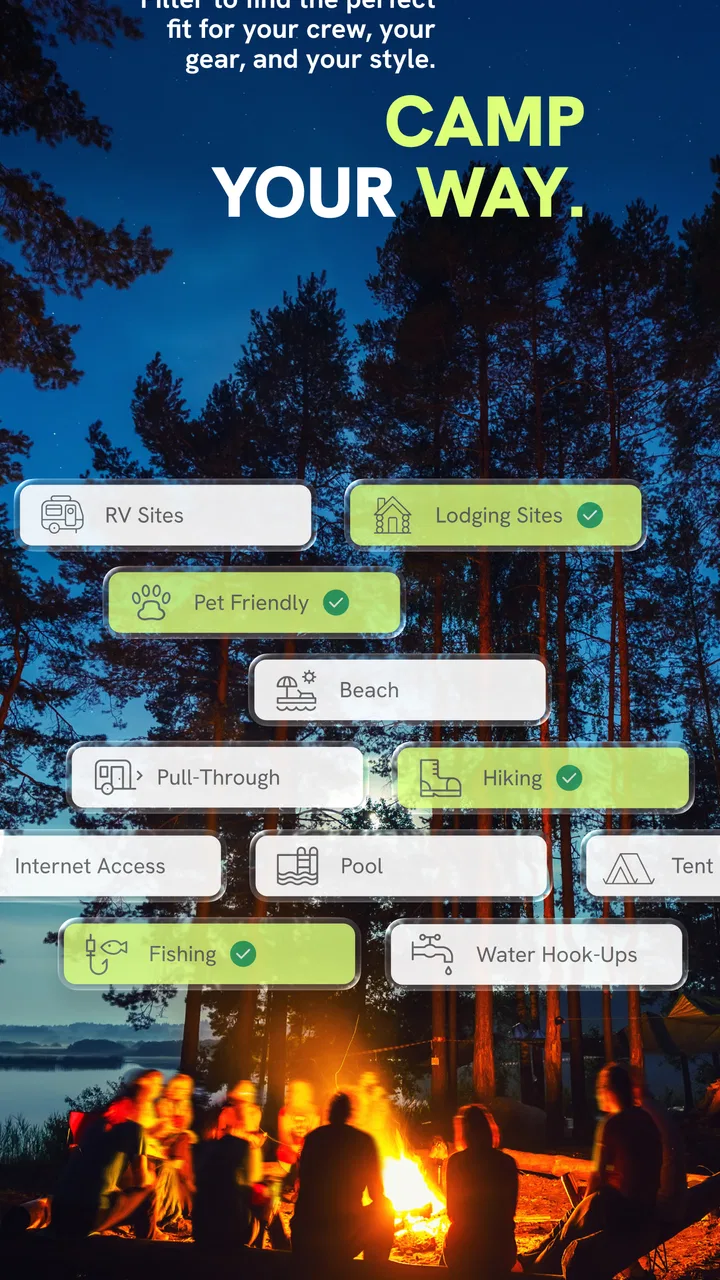
Campspot is a comprehensive app for booking RV and tent camping sites across the U.S. It allows users to search for campsites based on location, amenities, and availability. The app provides detailed information about each site, including photos and reviews, making it easy to find the perfect camping spot for any adventure.
02Is Campspot free to use?
Yes, the Campspot app is free to download and use. However, while browsing and searching for campsites is free, booking a site may involve additional fees. These fees depend on the campsite's policies, and users will be clearly informed of any charges during the booking process.
03Can I cancel or modify a reservation made through Campspot?
Yes, Campspot allows you to cancel or modify your reservation, but policies vary by campsite. It's important to review the specific cancellation and modification terms of the site you choose. Typically, campsites have their own refund policies, and some may charge a cancellation fee.
04Are there specific requirements for booking through Campspot?
To book a campsite on Campspot, you'll need to create an account. This involves providing some basic information and setting up a payment method. Some campsites may also have specific requirements or restrictions, such as age limits or pet policies, which will be listed in their details.
05Does Campspot offer customer support if I encounter issues?
Yes, Campspot provides customer support to help with any issues you may face while using the app. You can reach out through their in-app support feature or visit their website for contact information. They are committed to ensuring a smooth experience for all users.
Pros
- User-friendly interface enhances navigation.
- Wide variety of camping options available.
- Real-time availability updates.
- Detailed campground descriptions and photos.
- Secure booking and payment options.
Cons
- Limited offline functionality.
- Occasional slow loading times.
- Some campgrounds lack reviews.
- In-app ads can be distracting.
- Location services drain battery.

Campspot: RV & Tent Camping
Gallery